

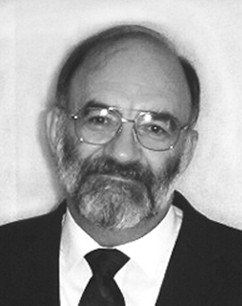
MY PERSPECTIVE, Gary Damron
Two thousand years ago, in the arid expanse of Judea near the Jordan River, the word of God came to John the Baptist, son of Zacharias and Elizabeth. John was sent to break a silence of four hundred years since the last prophet spoke. All three Synoptic Gospels - Matthew, Mark, and Luke - harmonize in portraying his role, while the gospel of John the Apostle adds a theological lens. All four books open the account of Jesus' public ministry with the story of this forerunner who had been prophesied centuries before.
In Mark 1:2, we find his coming as fulfillment of God's promise in Malachi 3:1, "'Behold, I send My messenger ahead of You....'" The careful historian Luke anchors the scene in Luke 3:1-2 by naming Tiberius Caesar, Pontius Pilate, and Herod the tetrarch. Because Luke's intent was to write from a Jewish and Eastern perspective, not strictly Roman chronology, his date is fairly precise at 28-29 AD. Luke also named tetrarchs like Philip and Lysanias, and high priests Annas and Caiaphas, which paint a vivid backdrop of political and religious tension under Roman occupation.
Matthew's account shows an urgency, as John preached, "'...the kingdom of heaven is at hand'" (3:2) - not a distant dream, but God's rule arriving presently in the person of Jesus. In preparation for this kingdom, all three gospels quote Isaiah 40:3, "'make ready the way for the Lord'" (Mark 1:3, Matthew 3:3, and Luke 3:4). The kingdom, which is central to Jesus' teachings, burst on the scene of history in the person of Jesus, who even today offers forgiveness, justice, and spiritual restoration.
John the Baptist identified Jesus as "Lamb of God who takes away the sin of the world" (John 1:29,36) and "Son of God" (1:34). This testimony of Jesus as Lord [a term often used for God in the Old Testament] had already been stated by Elizabeth (Luke 1:43) and by the angel addressing the shepherds (Luke 2:11).
All three synoptics provide instructions on preparing, beginning with the words from Isaiah 40:3, "The voice of one crying in the wilderness." While John ministered in a barren and desolate place, the Judean wilderness, God's cry is about the wilderness of our sin and spiritual need. Isaiah continued, "Make ready the way of the Lord, make His paths straight." Luke expands this quote, adhering closely to the Greek Septuagint, using Isaiah 40:4-5 which speaks of mountains and hills brought low, of crooked roads straightened and smoothed. Again, the scripture is more concerned about the spiritual terrain of our lives.
Other prophecies had called for similar actions. Isaiah pleaded in 1:16-17 for people to seek cleansing and justice. Isaiah 55:7 reads, "Let the wicked forsake his way and the unrighteous man his thoughts; and let him return to the Lord...." Jeremiah 7:5-6 reads, "If you truly amend your ways and your deeds, if you truly practice justice...if you do not...walk after other gods...then I will let you dwell in this place." The result of doing all this is found in the New Testament. "'All flesh shall see the salvation of God'" (Luke 3:6). This closing verse is taken from a prophecy in Isaiah 52:10.
John the Baptist identified Jesus as the One who would bring salvation to all people, not just Jews; the kingdom of heaven is inclusive for anyone who repents and believes. The spiritual wilderness is universal, but John's message demolishes barriers, allowing every heart, Jewish or Gentile, to find the Way.
John the Baptist preached a personal responsibility to turn away from pride and sin, changing the direction of our hearts and lives. He demonstrated humility by declaring that he was not the Messiah, but simply preparing the way for Someone much greater. "'After me comes He who is mightier than I.'" (Mark 1:7-8; Matthew 3:11; Luke 3:16).
Another John, the apostle "whom Jesus loved", added theological depth in his gospel. “He [John the Baptist] came for a witness, that he might bear witness of the light, that all might believe through him. He was not the light, but came that he might bear witness of the light” (John 1:7-8). John the Baptist understood his role perfectly. His entire ministry was to point away from himself to Jesus, the mightier One who baptizes not merely with water but with the Holy Spirit and fire (Matthew 3:11; Mark 1:8; Luke 3:16). If we want to walk in the light, we need to follow the example in John 3:30: "'He must increase, but I must decrease.'"
Two thousand years later, how can we make ready the way for the Lord in our lives? John the Baptist preached "repentance for the forgiveness of sins" (Luke 3:3). So, we first need to repent (also Mark 1:4 and Matthew 3:2), indicating a radical "change of mind and purpose". This is not a superficial regret, but detesting and confessing our errors, and embracing God's goodness as a standard to live by. True repentance is an exercise of the will that enables God to do His work in us; it overthrows self, and places the coming King on the throne of our lives.
In a world of distraction, materialism, moral confusion and darkness, the kingdom of heaven has come, and the Light of Jesus calls us to glad submission. As in John the Baptist's time, repentance is still the road map.