
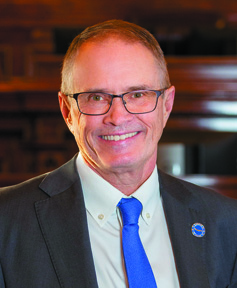
GUEST COLUMN, Shannon Francis, 125th District Representative
Thanks to everyone that came out to Saturday’s legislative update sponsored by the Liberal Area Chamber of Commerce and the Southwest Kansas Board of Realtors. Senator Ryckman joined me, and we had a lot of good questions and a good turnout. Our next forum will be Saturday, March 14. I hope to see you there.
Local realtors Tanya Colvin and Corey Barnett, were in Topeka this week and stopped by the office. They talked with me about the need for legislation regarding squatters. It’s becoming a big problem throughout Kansas. They also talked about concerns with the proposed assessment cap Constitutional amendment. Among their concerns were — it does not really solve the problem, it discourages new construction and home improvements, it creates unequal taxation of comparable properties and unfairly transfers the property taxes from highly desirable residential properties onto commercial buildings, agricultural land and lower cost housing.
It was also great visiting with Donna and Travis Apsley at the Rural Electric Cooperative state meeting. Rural Electric Coops are the backbone of our energy industry in rural Kansas.
Last week I had the opportunity to attend the Seward County Conservation Dinner. It was a great event. During the dinner, members of our new Future Farmers of America (FFA) chapter were recognized. FFA is a great youth organization focused on developing leadership, personal growth, and career success through agricultural education. There was also a great program on what meteorologists expect the weather to be for our agricultural sector this year. Thank you for the invitation.
SB 254, as amended, prohibits immigrants who are unlawfully present in the United States from receiving any state or local public benefits. The bill also amends criminal procedure law to require verification of a non-citizen criminal’s immigration status and establishes the rebuttable presumption that a criminal who is unlawfully present in the United States is a flight risk for the purposes of issuing appearance bonds.
It addresses two related concerns, accountability in public benefit programs and public safety within our criminal justice system. SB 254 ensures that state and local public benefits are provided only to individuals who are lawfully present in the United States, except where federal law already requires otherwise. The bill also makes targeted updates to criminal procedure. When a person charged with a crime is not a U.S. citizen, their immigration status must be verified with the federal government. In cases where an individual is determined to be unlawfully present, the bill establishes a rebuttable presumption of flight risk for bond decisions while still preserving judicial discretion and due process. Judges retain the ability to release individuals when they are not a risk to public safety or flight, based on the facts presented in court.
The House overwhelmingly approved an amendment to the legislation to continue current law, which says resident tuition and fees at our colleges and vocational schools are not a prohibited public benefit. Kansas Statute 76-731a currently allows undocumented immigrant children in our towns to pay resident tuition if:
• they have attended an accredited Kansas high school for three or more years,
• has either graduated from an accredited Kansas high school or has earned a general educational development (GED) certificate issued within Kansas,
• have filed an affidavit stating that they or their parents have filed an application to legalize their immigration status, or will file such an application as soon as they are eligible to do so.
I supported this amendment. The bill will now go to a conference committee for the Senate and House to reconcile differences in the versions that each chamber approved.