

ROBERT PIERCE
• Leader & Times
Earlier this month, Sen. Dr. Roger Marshall kicked off his “120 Stops to Strengthen Rural Kansas” Tour, a statewide effort focused on ensuring rural Kansas communities remain strong places to live, work, raise a family and build a future.
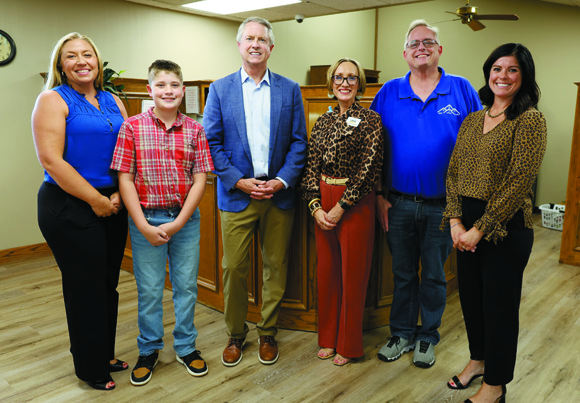
As part of the tour, the senator visited the Liberal Area Coalition for Families and came to the annual meeting of Seward County Farm Bureau , Aug. 19.
Throughout the recess, Dr. Marshall has met directly with Kansans across all sectors. From expanding access to quality rural health care and workforce training to supporting Main Street businesses, manufacturers and local infrastructure, the senator highlighted the work being done to deliver results and create new opportunities in communities across Kansas.
Delivering for rural Kansas:
• $221.9 Million for Rural Health Care: Secured funding to strengthen rural hospitals, expand access to care, and support rural health systems.
• $62.7 Million for Kansas Infrastructure: Supported successful BUILD grants for road, bridge, and transportation projects across Kansas.
• Unlocking Rural Investment: Sen. Marshall’s Investing in All of America Act was signed into law, expanding access to private capital for rural communities and small businesses.
• Tax Relief for Farmers and Main Street: Delivered the Working Families Tax Cuts provisions benefiting Kansas farmers, small businesses, and manufacturers, and working families.
• Building the Rural Workforce: Supported Workforce Pell to expand access to technical and skilled-trades education.
Through stops, Sen. Marshall is hearing directly from Kansas across industries about local challenges and opportunities while highlighting the people and organizations working to strengthen rural communities across the state.
Much of Marshall’s message throughout the tour has centered on agriculture, and earlier this year, he introduced the Beef Labeling Clarity Act, legislation to bring greater transparency to beef labeling, give consumers more information about ranchers get the credit they deserve for raising the highest quality beef in the world.
The legislation would require beef sold in the U.S. to carry clear labeling identifying where the animal was born, raised, slaughtered and processed – giving consumers the information they need to make informed decisions at the grocery store while allowing American producers to distinguish their beef from foreign imports.
“Kansas ranchers raise the best beef in the world, and consumers deserve to know where their buying comes from,” Marshall said in a recent press release. “For too long, foreign beef has been able to benefit from confusing labels that make it harder for families to know what they’re actually putting in their grocery carts. When a product carries that label, it should mean it was born, raised and processed right here in the United States – period.”
While the proposed Farm Bill does not solve everything, Marshall said it is definitely a step back in the right direction.
“You think about the year-round E15, that’s about the equivalent of maybe a fourth or fifth of all the corn we export,” he said. “It’d be like having another trade partner that’s going to increase our exports by say 25 percent. That alone just starts the whole ball rolling as well.”
Marshall said the Farm Bill has items for fertilizers by helping have more domestic fertilizers and less dependency on foreign countries.
“The loan limits – especially for young starting farmers – there’s increased limits for those,” he said. “We raise the amount of CRP – the amount of conservation money in this goes up, I think, about 30 percent for the different conservation programs.”
Marshall said $65 billion was added to crop insurance through WFTC, and he said Title I funding is a huge factor in farm legislation as well.
“We raise the refence prices – and they’re going to be there for the fall – but the question is long-term what that’s going to take care of,” he said.
Marshall told Alexander, Kansans are talking about issues such as input costs, fertilizers, pesticides and seeds.
“I can’t run away from diesel, and I’ll take responsibility from the standpoint that certainly the Strait of Hormuz is impacting this,” he said. “This is why no one wants this war to be over sooner than President Trump and myself do. We understand the strait, it’s not totally closed, but it’s impacting the price of diesel as well as fertilizer. On the other hand, we don’t want Iran to have nuclear weapons either. So I feel we’re very close to getting that resolved. We took care of the crop insurance. We took care of the reference prices. Now, we’ve got to work on those other input costs.”