



ROBERT PIERCE
• Leader & Times
An area electric cooperative is among the first 188 utilities in America to sign a pledge as part of an initiative focused on protecting consumers from rising electricity costs while strengthening the reliability and resilience of the electric grid.
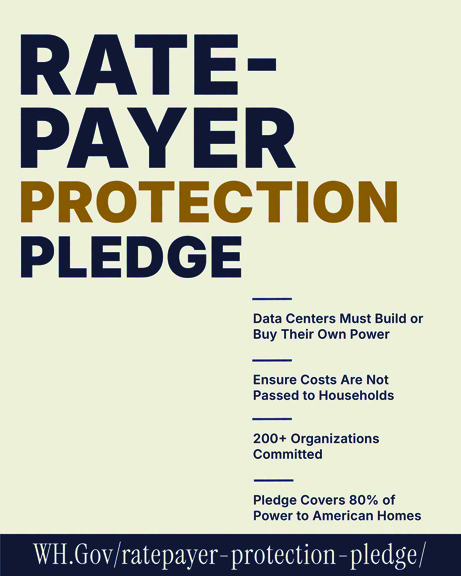
Under the Ratepayer Protection Pledge, Tri-County Electric Cooperative and other participating organizations commit to meeting new energy demands responsibly by ensuring the customers driving the need for new generation and infrastructure bear those costs, rather than existing ratepayers.
“The initiative also encourages investments that strengthen grid reliability, support local communities and promote long-term affordability for American consumers,” TCEC Communications Supervisor Brittney Davis said in a press release.
Davis said the pledge is part of a broader effort that has secured commitments from more than 200 organizations nationwide.
“Participating utilities and companies pledge to support policies and practices that protect ratepayers from electricity price increases driven by growing energy demand, particularly those associated with data centers and emerging technologies,” she said.
TCEC CEO Zac Perkins said supporting this initiative was a natural decision for the co-op because it aligns closely with its longstanding commitment to responsible stewardship, affordable and reliable service and putting the interests of members first.
“By signing this pledge, we are reaffirming the principles that have guided our organization for years and demonstrating our continued dedication to protecting consumers while supporting the growth and resilience of our electric infrastructure,” he said.
As a member-owned cooperative, Davis said TCEC remains committed to making decisions that prioritize the long-term interests of its members and communities.
“Participation in the Ratepayer Protection Pledge reflects TCEC’s continued focus on protecting members from unnecessary costs,” she said.
TCEC was one of nine distribution co-ops in Oklahoma to sign the pledge along with Cimarron, CKEnergy, Cookson Hills, East Central, Indian, Kiamichi, Northwestern and Southeastern.
That number represents 30 percent of the 30 distribution cooperatives in Oklahoma and 830 such cooperatives nationwide.
The National Rural Electric Cooperative Association (NRECA) and Energy Information Administration (EIA) in 2023 estimated the average annual residential electricity bill was $1,642.
It was likewise estimated one in four households served by electric co-ops have an annual income below $35,000, and in nine states, as many as 42 percent of co-op served households fall below this income level.
Data shows electric co-ops sell 52 percent of their power to households. Furthermore, NRECA said electric cooperatives are built by and belong to the communities they serve, led by members from the community and are uniquely suited to meet local needs.
The 2024 J.D. Power Electric Utility Residential Customer Satisfaction Study showed co-ops secured the top 10 spots based on individual scores and the highest average score among all electric utility providers.
NRECA likewise said electric co-ops rely on a diverse suite of resources to reliably meet the energy needs of their local communities, and as of June 2025, electric co-ops have announced plans to add nearly 15 gigawatts of new generation capacity, including more than 8.5 GW of natural gas generation.
These projects will come online between 2025 and 2030, and additional announcements are expected. NRECA said the co-op fuel mix is anchored by always available energy (85 percent) from coal, natural gas, nuclear and hydroelectric power, supplemented by non-hydro renewables (14 percent), primarily intermittent wind and solar.
Co-ops nationwide are also investing in battery storage technologies that can help address intermittency and improve reliability. Co-ops also thoughtfully explore all options, fuels and technologies as they work to meet their consumers’ evolving energy needs.
Cooperatives power 56 percent of the American landscape, serve 42 million people, including 92 percent of persistent poverty counties, power more than 22 million businesses, homes, schools and farms in 48 states and return $1 billion to their consumer-members annually as not-for-profit organizations, according to NRECA.
Across the country, electricity demand is surging, driven by growing communities, electrification of the economy, power-hungry data centers and new manufacturing plants.
According to the North American Electric Corp. 2024 Long-Term Reliability Assessment, electric demand growth is the highest it has been in more than two decades, and over the next 10 years, peak power needs are expected to rise by 17 percent. Newly announced projects, especially data centers, will drive that number even higher.
Meanwhile, government policies aimed at shutting down fossil-fueled based generation, more extreme weather and years-long delays in permitting and siting for new transmission lines are turning this power boom into a capacity crisis.
More than 115,000 megawatts of baseload coal, natural gas and nuclear generation – enough to power about 100 million homes – is forecast to retire over the next decade.
As a result, much of the country faces an increasing risk of energy shortfalls over the next 10 years.