



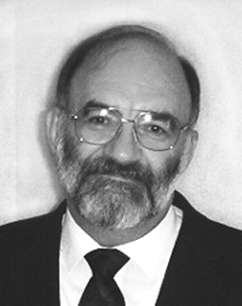
MY PERSPECTIVE, Gary Damron
The third chapter of Exodus contains one of the most significant conversations in all of scripture. God spoke to Moses from a burning bush, with an impossible-sounding assignment: "'Come now, and I will send you to Pharaoh, so that you may bring My people, the sons of Israel, out of Egypt'” (Exodus 3:10).
Moses' response in the next verse was immediate and honest. "'Who am I, that I should go to Pharaoh, and that I should bring the sons of Israel out of Egypt?'” He didn't pretend to be capable; he frankly admitted his limitations. Moses knew that he was not enough for the task. But God didn't argue about Moses' inadequacy. Instead, He answered with the promise, "'Certainly I will be with you'" (verse 12). The success of the mission would not depend on Moses' strength, skill, or status. It rested instead on the presence of the God who was sending him.
When Moses pressed further, and asked what name he should give to the people, God replied with the most profound self-revelation in the Old Testament. "'I AM WHO I AM.'" The same God who calls is the God who is, and was, and always will be - external, self-existent, unchanging, and fully sufficient - the one true and living God.
The call of Moses didn't arise in a vacuum. Israel was suffering in slavery under harsh rulers in Egypt. Their cries had risen to God, and He had seen their affliction (Exodus 3:7-9). Even now, God is not distant or indifferent. He steps in to intervene in the story of people who are unable to free ourselves. And in this account, he chose an unlikely instrument - an aging shepherd who had fled Egypt forty years earlier - and gave him a mission to change history.
This pattern appears throughout scripture: God sees a need, formulates a plan, then calls people who feel inadequate to participate in that plan. The emphasis is never on the greatness of the human servant, but on the sufficiency of the One sending.
"'Who am I?'" is a question most of us have asked. When facing assignments, responsibilities, or challenges, we look at our limitations - inexperience, lack of courage, limited resources, past failures - and conclude we're not the right person. God's answer remains the same, "'I will be with you." When we admit our shortcomings, we make room for God's adequacy. The Great "I AM" is enough. The apostle Paul expressed, "God's power is made perfect in weakness" (2 Corinthians 12:9).
In the Old Testament, God's presence is often overwhelming. The holiness of God may create distance. His presence appears to be a barrier, because sinful people cannot stand, on their own terms, before a holy God. Yet His presence is a witness, because it reveals who God truly is, majestic, pure, and utterly other than us. His holiness draws people toward worship and obedience.
The story didn't end with the burning bush or the mountain of Sinai. In the fulness of time, God revealed Himself in a new and profound way. This same God took on human form in the person of Jesus Christ. John wrote, "The Word became flesh, and dwelt among us, and we saw His glory, glory as of the only begotten from the Father, full of grace and truth” (John 1:14).
Jesus is the perfect revelation of the Father. He could in fact say, "'He who has seen Me has seen the Father'" (John 14:9). The overwhelming, holy presence of God became approachable. He walked among ordinary people, touched the unclean, welcomed sinners, and ultimately gave His life so that the barrier of sin could be removed. He invited humans into a relationship that Moses probably could not have imagined. The "I AM" of the burning bush is the same God who says, "'I am the bread of life,'" and "'I am the light of the world'" and "'I am the good shepherd.'" Even, "'I am the resurrection and the life'" (John 6:48; 8:12; 10:11; 11:25).
After the death, resurrection, and ascension of Jesus, God made His presence available in yet another way. In John 14:16-17, Jesus promised that the Father would send the Holy Spirit to live in each one who believes. Paul later wrote that our bodies are temples of the Holy Spirit, who comes from God and who lives in us (1 Corinthians 6:19).
The Presence who was once external and overwhelming has become internal and personal. The same God who met Moses in the burning bush now dwells and burns within His people. We are not left alone to carry out assignments; His presence goes with us.
God still calls and commissions ordinary people. Each of us has a purpose that is bigger than we are, and a Presence who is enough for whatever lies ahead. He invites honesty about our limitations, and he answers with the promise He will be with us. When faced with situations that expose our weakness, we remember that the God who calls and accompanies us is the "I AM" - eternal, sufficient, and faithful.