



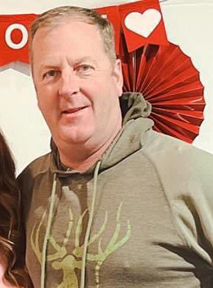
GUEST COLUMN, Ryan Martin, Seward County
After nine months of vocally opposing any proposed wind farm in the county, I finally had my first, and so far only visit from someone who was adamantly in favor of the turbines.
Much to my surprise, he burst into my office like the Kool-Aid Man, offered no introduction, and immediately referred to me and other opponents of the wind farm as “sorry mother*****s.” Normally, someone addressing me that way in my office would likely be scheduling an emergency dental appointment after picking their teeth up off the floor. But in this instance, I thought, “This is going to be interesting. I’ve got to hear this gentleman out,” so I kindly invited him to sit down.
He immediately began a heated rant, claiming they would never place turbines closer than 1,500 feet from any home, and that he didn’t understand how I could tell him what he could do on his own private property. He explained that he had leased ground to Invenergy and hoped to someday receive one of these “money making windmills.”
After listening for a few moments, I decided it was time to speak and perhaps educate him a little. I explained that any commercial endeavor requires a Conditional Use Permit approved by the county, and that currently there are more restrictions on someone installing a septic tank than there are for commercial wind turbines. Quite honestly, if he wanted to install a small wind turbine on his own property and run an extension cord from it to his house, I wouldn’t have a problem with that.
To my disbelief, he had never even heard of a Conditional Use Permit.
So I reached behind my desk, grabbed a copy of Invenergy’s CUP application, and opened it to the page where I had highlighted the proposed 1,000-foot setback. I explained that the Planning and Zoning Board had already suggested increasing that setback to 1,900 feet.
I then explained how much I value personal property rights, but when one neighbor’s decisions negatively affect another neighbor’s property value, health, well-being, and ability to resell their property, that becomes a serious issue.
To my amazement, he agreed.
As our discussion continued, it became obvious that he was not truly a supporter of wind energy itself, but he was interested in the check he might receive if turbines were ever built on the property. In fact, it wasn’t even his property; it belonged to his mother. He explained that if turbines were developed there, the income could help him eventually buy out his siblings after his mother passed away.
Keep in mind, this man isn’t even from Seward County. As a matter of fact, he’s not even from Kansas. Once again, this is a perfect example of what I’ve been saying all along: things that aren’t good enough for someone’s own backyard somehow become acceptable for their neighbors as long as there’s money involved.
He didn’t want them near his own home, but he was perfectly fine with putting them in someone else’s community.
After we shook hands and he left my office, I kept wondering: at what point, and for how much money, does someone abandon their principles? Because that’s essentially what much of this boils down to.
I truly believe many people do not actually support the “green energy” movement or believe wind energy is the future. But the moment enough money is dangled in front of them, they suddenly decide they can tolerate turbines they otherwise find unattractive and undesirable. At some point they say, “Well, that’s enough money for me. To heck with my neighbors, at least I got paid.”
At the last Commission meeting, we heard a citizen say he supported wind turbines because “we can tax them.” That sounds easier said than done.
Then we heard one of Invenergy’s representatives state they would receive a 10-year tax abatement. That’s a bold statement for a company promoting “economic benefits” while paying no taxes for an entire decade. The only revenue we would receive during that period would be so called PILOT payments, “payments in lieu of taxes” or voluntary contributions to the community, both of which are entirely controlled by them.
So let’s consider a hypothetical scenario:
What happens if, in year nine of their tax abatement, the company files bankruptcy or goes broke? How exactly are we supposed to collect tax revenue starting in year eleven?
That may sound far-fetched, but every time we turn on the news we hear about efforts to cut wind-energy tax credits and subsidies. It has already been proven that wind energy struggles to survive without government support. Even Warren Buffett admitted that without tax credits, investing in wind energy would be foolish, but with tax credits, it becomes profitable. That’s why Berkshire Hathaway invests in wind energy and even owns wind-energy companies.
So the question is absolutely relevant.
Have you ever wondered why two of the largest landowners in Seward County, both of whom live outside the county, have refused to lease their land for wind development? One of them even owns land within the proposed Thresher development area and signed a petition opposing the project.
Let me explain why.
Back in the late 1990s, along the Oklahoma-Texas line south of Guymon, in a small community called Hitchland, a wind company came in much like they are doing now in Seward County. They leased land and installed turbines across the landscape like a picket fence.
At first, people were amazed. Folks drove out just to see the new technology and marvel at the giant turbines. But the excitement didn’t last long.
A few years later, the company went bankrupt.
The area soon looked like a futuristic wasteland. Turbine blades broken off and lying in fields, weeds growing around abandoned towers, oil running down the structures. It became nothing more than an industrial junkyard scattered across farmland. There was even a YouTube video showing a bulldozer pulling one over and dragging it away.
For years, farmers dealt with turbine debris blowing through their fields and the burden of cleaning up the mess.
Eventually another company purchased the site and restarted operations, but the damage left a lasting impression. Many landowners in that region swore they would never allow turbines on their land again.
One of the largest landowners in Hansford County Texas, a customer of mine told me directly that he wants nothing to do with wind companies, calling them “modern day shysters.”
Two of the largest landowners in Seward County also own acreage in that same area and witnessed the entire situation firsthand.
In closing, I would ask this:
After Invenergy sends in its big city lawyers from Chicago and Kansas City, along with land agents from Denver and elsewhere, promising endless prosperity and painting pictures of “free Bubble Up and rainbow stew,” how much money did it take to buy your opinion? How much money did it take to convince you that wind energy is the future? How much money did it take for people to say, “My neighbor can stare at that turbine every day, but at least I don’t have to,” or “Once I get my check, I’m leaving the county anyway”?
Remember: we all chose to live here.
We gave up mountains, rivers, beaches, and lakes for the beauty of wide-open skies, sunrises, and sunsets.
And honestly, that’s about all we have left until that gets ruined, too.