The first day of fall happened this week, and it was a reminder that we are coming up to the last part of the calendar year. It’s hard for me to believe that we’re in the last quarter of 2025. Time seems to be going faster than ever.
But as we all know, that is just how time works. Fall is the time of year when many things come to a close, as the days grow shorter, the temperature drops, and we do those last-minute clean-up jobs in the yard and the garden. It can feel bittersweet to say goodbye to the backyard cookouts and slower pace of summer.
Freedom of religion and freedom of speech are not favors handed down by Washington. They are rights — foundational, God-given rights — recognized in our Constitution to ensure that no government, no matter how powerful, can strip them away.
And yet, new proposals in Congress would do exactly that. Cloaked in the language of “reform” and “accountability,” these measures would empower federal agencies to decide which churches, charities, or community groups are allowed to operate. If an organization’s beliefs don’t align with the prevailing politics of the day, it could face audits, frozen donations, or even the loss of its tax-exempt status.
The person who knows us best is Jesus, and the best way to meet Him is through reading four books in the New Testament, called the Gospels. Matthew, Mark, Luke and John offer a portrait of Jesus’ life, teachings, death, and resurrection, and invite us to know Him personally.
The Old Testament provides the story of God’s preparation to send the Son to be the Messiah (called Christ) to deliver the world from the grasp of evil. New Testament letter writers such as Paul and Peter help clarify the meaning of Jesus’ life, and the Gospels give us a picture of His interaction with the Father and people.
I never saw Uncle Eddie studying math or English, but I remember Eddie prepping for his Government final.
His teacher was Mr. Chain. He also taught my brother and me.
I asked him if he could hang on long enough to teach my son, and he said, “I think I’ll make it.” I later asked him if he could hang on long enough to teach my daughters.
“Not happening,” he said.
Ask anyone who had him, and he is either their favorite teacher or at the very least the most respected.
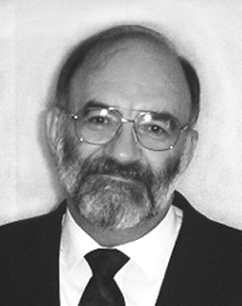
Charles Chain wasn’t showy. He wasn’t looking to be friends with his students, and he didn’t play favorites.
His mission was simple — by the end of the year you will know how the government works whether you want to or not.
Government was my favorite subject. Mr. Chain explained the Constitution from the Preamble to the amendments in a way that made each student he taught understand it.
Mr. Chain was a veteran, and if we could ever get him talking about the Navy we might be able to escape Marbury vs. Madison for a day. There was wisdom in his military stories as well, so it was not a day wasted.
But he would get back on task and back to teaching the critical components of the operation of government.
Mr. Chain was doing more than providing an education. He was creating citizens who would be equipped with the knowledge of their rights and the way laws are created.
A bit monotone? Perhaps. But everything he said was with intent.
Perhaps by today’s standards a Chain lecture might seem boring. Government was not an exciting class for the most part.
But the discussions that became part of class were lively. And Mr. Chain knew his subject matter inside and out.
Even after I graduated and started a career in media, I would check with Mr. Chain from time to time on various aspects of process and governmental action.
Mr. Chain was known as much for his stoic appearance as for the occasional grin, even the rare chuckle.
He was real, and he came with a reputation. Very few students in the Liberal school system who had any relative that had attended Liberal High School didn’t know that one day you would have to pass Mr. Chain’s class.
It was tough material but it was delivered by a competent and qualified instructor.
That’s what made him a legend.
I don’t know the value I could put on every class I took, but I know most value that I can attribute to my education came from Mr. Chain’s government class.
Toward the end of the year, we had to write our own constitutions for are fictitious island nation. Would it be bicameral or unicameral? How long would the terms be and why?
We had our mini constitutional conventions and wrote up our own form of government, and yet none could hold a candle to the one we had come to know in Mr. Chain’s class.
That’s the legacy of the now departed Mr. Chain. He didn’t create high school graduates. He empowered them to be effective citizens. And we owe him our undying gratitude. Thank you, Mr. Chain. Godspeed.
One of the rules of the Kansas Department Of Corrections grant that Cimarron Basin Community Corrections has for Fiscal Year 2025 is that “Grantee must demonstrate salaries for all positions are consistent with similar, County-funded positions.”
Is Kayla Janko’s salary of $104,957 in line with that of others at the county in positions of comparable responsibility? And what about her supervision officers who are making $30.99 per hour (At 40 hours per week, that amounts to $64,459 in a year)?