



ROBERT PIERCE
• Leader & Times
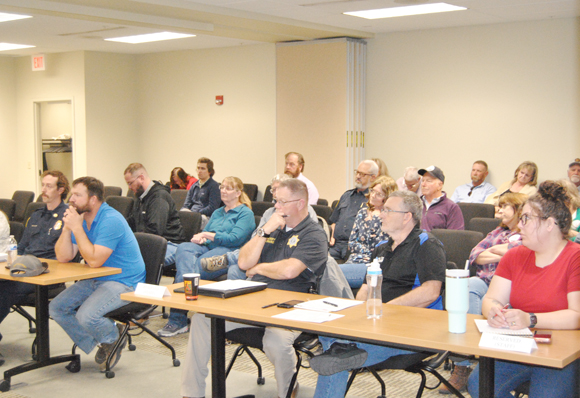
The last two presenters during the citizens comments portion of the March 2 Seward County Commission meeting spoke on a topic that has had many talking for quite some time.
Residents Kathy Fitzgerald and Scott Owens, like many in rural parts of the county, spoke out against the proposed production of wind farms in the county.
Fitzgerald said the size of the wind turbines as well as their longevity are a large part of why she feels they do not belong in Seward County.
“These turbines aren’t small,” she said. “They’re hundreds of feet tall, and they’ll be here longer than any of us in this room hold office. Once they’re built, there’s no taking them back.”
Fitzgerald said only a few landowners get paid, and their neighbors have to live with the noise, lights, shadow flickers and a change to their surroundings for decades.
“That doesn’t feel fair, and it causes hard feelings in communities that have lived side by side for generations,” she said. “I do believe in property rights, but property rights go both ways. One landowner’s decision shouldn’t reduce the value or quality of life of the neighbors who didn’t sign a lease. Decisions like this affect all of us, not just the ones signing leases.”
Fitzgerald said Seward County’s rural roads are not built for heavy industrial traffic like the traffic created by wind turbines.
“Hauling turbine parts, cranes and concrete tears up county roads, and too often, those repair costs end up back on local taxpayers,” she said. “We’re also told this is economic development, but once construction crews leave, there are very few permanent jobs. Most of the money goes to out-of-state companies while the county is left with the long-term impacts.”
Fitzgerald said this is not the kind of economic development that keeps young families here or supports local businesses.
“Real economic development in Seward County should create jobs that put people to work year after year,” she said. “It keeps money circulating locally and doesn’t divide neighbors or strain our land and water. This is good Kansas farmland. Once you pour concrete and build roads, that ground is changed for good.”
Fitzgerald said these decisions should be made by the county, not by outside companies, state pressure or advocacy groups that do not have to live with the consequences.
“You’re the ones we elected to look out for us,” she said. “I’m asking the commission to at least adopt a temporary moratorium on large wind projects in Seward County.”
This pause, Fitzgerald said, would give commissioners time to review setbacks, road use agreements, water and irrigation impacts, economic benefits and decommissioning requirements before any permits are approved.
“I’m just asking you to slow down, listen to the people who live here, and make sure the rules truly protect Seward County before moving forward,” she said.
Owens too said he feels enough studies need to be done regarding the effects of wind farms.
“Until you’ve studied infrasound in the low sounds they make and how they can affect the health of not only the people who have to live close to them, but of livestock, pets and wildlife, as well as the flicker problems. There are so many issues you don’t know about,” he said.
Had wind farms been in place on days like this Pancake Day when the area was struck by multiple fires and a turbine had caught fire, Owens said this would have made for an even bigger mess.
“I wish everyone would take time to study up on this,” he said. “On Facebook, there’s the Seward County wind opposition site, and there’s a lot posted there with scientists talking about the problems. I see this as not a good move for our part of the state and for our area. There are a lot of people who are affected.”
Though he was unsure of the possibilities with the issue, Owens said some discussion has taken place in regards to a countywide vote.
“Let the people decide whether they want them,” he said. “Other options are you can send it back to the board, and give them more recommendations to make stricter setbacks or make more stringent rules. The future relies on you guys right here.”
Effects, Owens said, are shown in home values as well, as drops of 25 to 40 percent have been shown when wind farms are installed on a property.
“I hope you’ll consider those people who are greatly affected, but really aren’t getting the benefit,” he said. “They don’t own the property next to them. In truth, we’re standing up to huge corporations here – people with big money – and our government, the majority of the people who are in Congress and the House have investments in the very companies they’re giving the subsidies to build these.”