



ELLY GRIMM
• Leader & Times
The Liberal Police Department is always working hard to keep the Liberal community safe, and one of the ways the department does that is through the The Special Traffic Enforcement Program (STEP).
“In February, we had decided we were going to start doing some more STEP enforcement after we saw an increase in our grant funding from the state. What we are wanting to do is increase compliance and educate people at the same time. The officers are in compliance with my expectation and directive to educate people when we can and enforce when it’s necessary,” Liberal Police Chief Chester Pinkston said. “During that same time frame, the School Resource Officers reminded me Prom season would be quickly approaching, and one of the issues seen during that time is underage drinking and other similar activities, so a goal is to make sure people know we are going to be around and working to help keep the community safe. We knew at that time we would be doing an education effort, but that doesn’t do us any good to put that information out publicly because if we do, there’s a chance people who routinely violate the law will just make plans to avoid being out at those times, and it’s just not a big deterrent. STEP encourages local law enforcement agencies to conduct high-visibility enforcement during certain periods to address primary driver behaviors contributing to injury and fatality crashes in Kansas. Based on historical data that’s on file, the city has participated in the STEP Grant initiative through the Kansas Department of Transportation since 2012. The Liberal Police Department has stored the past five years’ worth of STEP documentation in house, and the accounting system pulled 10 years’ worth of data that reflects a total of $36,455.19 in funds paid out since 2017. This funding is paid on a reimbursement basis and deposited into a separate fund, Fund 730, and then at the end of the year, that money is reclassified to help offset general fund expenses and overtime for the LPD. To clarify for the public, local resources are used in the beginning, and then the reimbursement is paid after the fact after everything is submitted to the state.”
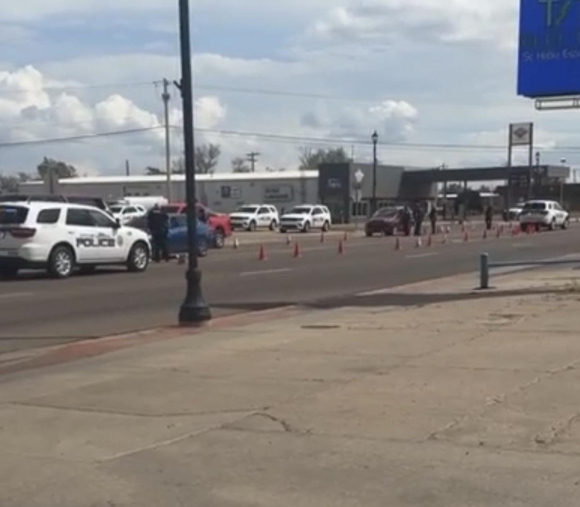
One of the most recent STEP efforts took place last weekend, which saw the LPD have driver’s license check lanes.
“With this most recent operation, there were more than 500 vehicles that made it through the check lane, with about 159 that were actually checked,” Pinkston said. “We had a very delineated rule with every third car being the one that got checked – the first two went through and got the educational pamphlets and then the third one was directed to the side, and each of those stops took less than five minutes, because that’s all we were allowed to ‘detain’ them without probable cause. The biggest question we got was from a younger man who asked why we were doing this, and after the officer explained what was going on, he was satisfied. There were zero arrests and zero citations, but there were some written warnings given out. There were other checks we did for DUIs and seat belts, among others, so the driver’s license check was not the sole focus of this operation, and we staggered those throughout the day. We did those different checks not just for enforcement but also so officers could get some extra training with those and get a feel how those are supposed to work.”
“We’d posted notice about as required by law, and we always work to do more than the bare minimum requirements when it comes to those types of matters. We knew this would cause a lot of discussion, but we weren’t entirely prepared for all the conspiracy theories that would be thrown out by the public, and I feel there were some things we could have done differently to help there not be so much of that anxiety,” Pinkston said. “There have been court rulings that have discussed the constitutionality of conducting check lanes – in 1981, the 10th Circuit U.S. Court of Appeals ruled routine driver’s license and registration check lanes were constitutional. Kansas is included in that 10th Circuit, and the case cited there is United States v. Prichard, but the foundational case Kansas follows is State v. Deskins from 1983, which was about the constitutionality of a DUI (Driving Under the Influence) roadblock established by law enforcement agencies. That’s the case that gives us delineated expectations for how to conduct these types of operations. This is not new, this is something the Liberal Police Department has been involved with since the early 2010s, so we had boots on the ground when this got started.”
Some local citizens, however were anxious throughout the weekend, and some expressed the need for better transparency about such operations.
“I and many Liberal citizens appreciate the daily dedication of law enforcement to this city, and I’m very appreciative of everything the officers do. That being said, however, I’m very disheartened and upset about the actions taken last weekend,” local citizen Keenan Thompson said. “The city’s mission statement is ‘to provide an exceptional quality of life for residents by nurturing a healthy economy full of opportunities; creating safe and connected neighborhoods; and embracing our diversity to foster a positive and welcoming community culture.’ I feel the driver’s license safety checkpoint that took place completely undermined that mission due to a lack of effective transparency, a lack of professional and empathetic understanding of the current political context, and the overall optics of how it was implemented. This was a safety operation, but as community leaders, you have to understand the implications of your actions and the context of which those actions are taking place. In the wake of the passing of HB 2372, which allows for the unconstitutional indefinite holding of individuals by law enforcement, and with the lack of transparency around this operation, you must understand what this looked like to citizens of Liberal. Regardless of what this safety check was meant to do, you must understand the optics it portrayed.”
“I am against the new law that was passed, and I’m asking this commission to please consider the impact this could make on our community. This could separate many of this community’s families and harm them,” local citizen Susana Basurto said. “It’s easy to say ‘Oh, you just need to have your driver’s license and insurance and nothing will happen to you,’ but that is not always the case. I work with immigration cases, and I know for a fact this will significantly increase ICE traffic and reduce local discretion.”
While Pinkston defended the overall operation, he admitted there could have been some better communication.
“The courts don’t require us to announce when we’re doing saturation patrols, so that’s what that wasn’t included in the original release that got sent out. The court’s expectation is to announce when we’re doing a check lane. I don’t want anyone to be afraid of the police department, and we wouldn’t have put out a release of what we were doing if we wanted to cause fear and anxiety among the community. That was never the intent,” Pinkston said. “The overall goal of what we do is community safety and education. During the time I’ve been here, we’ve done nothing but work to gain the community’s trust. One of the things that was asked of me when I came here was if the police department would get involved with immigration enforcement, and I said absolutely not – now, if there were a legal way to force us to do so, we would have to comply, but that hasn’t happened. In order for us to do immigration enforcement, that would include special training, which would require getting in touch with the federal government and having them come in. None of that has happened, and the Liberal Police Department is in no way, shape or form involved with immigration reform, and we don’t want anyone who comes into our office to feel unwelcome.”