

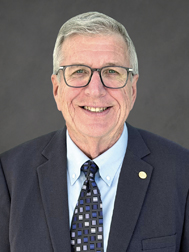
GUEST COLUMN, Dr. Eric Fossum
The tiny camera inside your smartphone traces its roots to a government research laboratory -- and to a federal law that helped turn an experimental technology into something billions of people now use.
In the 1990s, I led a team developing a new approach to digital imaging while working at NASA’s Jet Propulsion Laboratory (JPL). Our “camera-on-a-chip” condensed much of a camera’s technology onto a semiconductor. The resulting complementary metal-oxide-semiconductor (CMOS) image sensor eventually found its way into everything from phones and computers to cars and medical devices.
The scientific breakthrough alone, however, did not guarantee any of that would happen. A promising invention still needs financing, further development, and a company willing to take the risk of bringing it to consumers.
In 1980, Congress aimed to make that journey from lab breakthrough to commercial product easier. The Bayh-Dole Act gave universities and other research institutions the ability to patent discoveries made with federal support and license them for commercial development. Instead of leaving promising inventions stranded in government hands, the law created a pathway for private partners to invest in turning them into useful products.
I saw that system work firsthand.
I left JPL to co-found Photobit Corporation and pursue the commercial potential of our imaging technology. Caltech, which operates JPL, granted us an exclusive license to the relevant patents. With secure rights to the invention, we could raise capital, continue improving the sensors, and make the case to manufacturers that CMOS could compete with the imaging technology then dominating the market.
Today, manufacturers produce roughly seven billion CMOS image sensors annually.
Our experience is one example of a much larger story. Since 1980, Bayh-Dole technology transfer has helped create more than 21,000 startups and generate nearly $2 trillion in economic activity.
Now, however, policymakers are considering changes that could disrupt the framework behind those results.
One federal agency has proposed taking a more direct role in decisions about licensing inventions developed with its support -- decisions Bayh-Dole intentionally entrusted to research institutions. Meanwhile, a federal research agency detailee has suggested dispensing with the Bayh-Dole model entirely.
These debates can appear technical. Their consequences are not.
Commercializing a new technology can take years of investment with no guarantee of success. Companies and investors are far less likely to make those commitments when ownership or licensing rights could shift along the way. The more uncertainty the government introduces into the process, the harder it becomes to move promising research toward the marketplace.
For more than four decades, Bayh-Dole has provided a dependable bridge between federally supported science and private-sector commercialization. My career has shown me what can happen when that bridge works.
Policymakers should be careful before redesigning it. Somewhere in an American laboratory today may be another invention with the potential to transform daily life. The question is whether we’ll give its inventors a clear path to get it there.
Dr. Eric Fossum is the John H. Krehbiel Sr. Professor for Emerging Technologies, Director of the PhD Innovation Program, and Vice Provost for Industry Partnerships for Innovation and Education at Dartmouth College.