




- Details
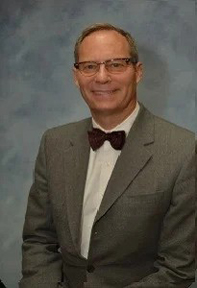
MY PERSPECTIVE, Gary Damron
Our culture celebrates freedom, perhaps more loudly than any generation before. Current slogans and ads promise liberation, yet more than ever many feel trapped - enslaved to desires, addictions, broken relationships, anxiety, and emptiness. With timeless clarity, the apostle Paul spoke to our situation in 1 Corinthians chapters 5 and 6.
The young church in Corinth existed in a prosperous, cosmopolitan, but morally chaotic city, famous for its temple to Aphrodite and an anything-goes reputation. Paul confronted head-on their problems, and ours, with the transforming power of the Good News in Jesus Christ. In chapter 5, he set forth that faith in Christ produces a new morality - not one that simply modifies behaviors, but one that offers a vital, life-changing presence. In chapter 6, he connected the Corinthians' new morality to Christian liberty, in both permissible and non-permissible areas.
- Details
GUEST COLUMN, Bob Lewis, 123rd District Representative
In August, the voters of Kansas will have an opportunity to take back the selection of Kansas Supreme Court justices from a small group of lawyers and political insiders. Proponents of giving this enormous power to this privileged few assert that it is merit-based and apolitical. However, examination of the recent work of the nominating commission that recently sent three names to the governor to replace a retiring justice proves otherwise: The current system for selecting state Supreme Court justices is highly politicized and does not pick the most qualified applicants.
First, let’s look at the heavy political involvement of the commission members. Eight of the nine have made political contributions to one or more political candidates. Of those political contributions, 15 were to Democratic candidates and two to Republicans. One member was formerly the long- serving mayor of Kansas City and another the former communications director of the Kansas Democratic Party. It’s hard to argue that the committee was not steeped in Kansas politics, overwhelmingly Democratic.
Read more: OPINION – Why ‘merit-based’ Kansas Supreme Court selection is actually political

- Details
GUEST COLUMN, Travis Couture-Lovelady, President of Kansas State Rifle Association
In 2010, Kansans amended the state Bill of Rights to guarantee that every person has the right to keep and bear arms for the defense of self, family, home, and state. The measure passed with 89 percent of the vote, more than 710,000 Kansans, the largest margin any gun rights amendment has ever received in any state. The Kansas State Rifle Association helped push that amendment from the Legislature to the ballot, and Kansans made their position unmistakable with their vote.
Words in a constitution, however, mean only what the courts say they mean. In Kansas, the final word on Section 4 belongs to the seven justices of the Kansas Supreme Court. And under the current system, gun owners have no meaningful say in who those justices are.
Read more: OPINION – Court that interprets Kansas gun rights should answer to Kansans

- Details
LETTER TO THE EDITOR, Carolyn Huddleston, Seward County
At the beginning of the year Brock Theiner left his job as the Director of the Landfill and became the Assistant Administrator. The budget for Administration had been written to include him. Personnel costs were budgeted as $270,000. But when the Commission was making cuts in February, they removed funding for the Assistant Administrator position. The amount budgeted for personnel in Admin. dropped to $165,440, and it was my understanding that Theiner was going to return to work at the Landfill.
That didn’t happen.
Read more: OPINION – Questioning the use of landfill funds for administrator is a matter of law

- Details
L&T Publisher Earl Watt
With the Kansas primary less than four weeks away, the crowded field of candidates for governor have been criss-crossing the Sunflower State making their case for why voters should choose them.
We have seen several right here in Southwest Kansas and will no doubtedly see several more before Election Day.
But with advance voting starting, and with the field crowded, it’s time to weigh in on how Kansas can move forward.
There are several good choices in the Republican primary, but the candidate best positioned to guide Kansas forward is Sen. Ty Masterson.
Read more: OPINION – Masterson in best position to lead Kansas forward
More Articles …
Page 11 of 32