


- Details
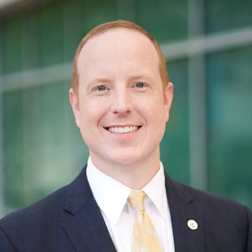
VINCE GIMM • Kansas Policy Institute Kansas has an opportunity to do more than pass another tax cut. It can change the rules of the fiscal game. That opportunity is becoming part of the current debate over Kansas property taxes. Kansas Senate President Ty Masterson recently called the property-tax situation a “crisis”, arguing that rising valuations are squeezing older homeowners on fixed incomes and making homeownership more difficult for younger Kansans. His proposed solution includes a Taxpayer Bill of Rights modeled on Colorado’s, limiting government growth based on population plus inflation without voter approval. He’s pointing the debate in the right direction. A Kansas Taxpayer Bill of Rights, or TABOR, could permanently restrain government growth at the state and local levels, protect taxpayers, and create a path toward eliminating the state income tax and reducing the burden of property taxes. But Kansas should learn from Colorado before copying it. Colorado voters adopted its Taxpayer’s Bill of Rights in 1992. Its core principle remains sound: government should not automatically grow just because more tax revenue arrives. Colorado generally limits annual spending growth of taxpayer money by state and local governments using population growth plus inflation and requires excess revenue to be refunded to taxpayers unless voters authorize the government to keep it. Kansas should adopt the principle but improve the design. The starting point should be KPI’s Responsible Kansas Budget: all state-funded spending should grow less than the three-year average of population growth plus inflation. This benchmark is ultimately about growing the government’s budget by no more than the average taxpayer’s ability to fund it. Population growth reflects changes in the number of people who support the government. Inflation captures changes in consumer costs and, over longer periods, tends to move with nominal wages and incomes. Together, they provide a practical benchmark for how quickly government can grow without consuming an ever-larger share of Kansans’ resources. If taxpayers’ resources grow 4 percent but government spending grows 8 percent year after year, that gap compounds. Eventually, government must take more through taxes, fees, debt, or other burdens. Kansas has experienced this problem. While Kansas has state spending and property tax revenue limits today, these are too weak and have allowed government to spend well beyond the average taxpayer’s means, thereby necessitating higher taxes. State-funded spending increased from $7.2 billion in FY2005 to more than $22.3 billion in FY2026. KPI estimates that FY2026 spending alone was about $10 billion higher than it would have been if spending had increased only with population growth and inflation since 2005. That does not mean Kansas should necessarily cut $10 billion tomorrow. It demonstrates what happens when government repeatedly grows faster than taxpayers can support it. A Kansas TABOR should prevent that from continuing. Moreover, the state should look at ways to reduce the $10 billion overspending by using performance-based budgeting like in law, but more effectively. Here is what should be included in a responsible spending limit by state and local governments. First, the limit should cover as much of the government budget as constitutionally possible. This is one of the biggest lessons from Colorado. Kansas should not impose a spending limit that lawmakers can circumvent by reclassifying funds, creating new fees, or changing accounting classifications. Second, Kansas should use the three-year average of state population growth and U.S. chained CPI inflation. Averaging smooths temporary spikes and provides greater predictability for taxpayers and budget writers. The Chained Consumer Price Index also accounts for how consumers substitute among products as relative prices change, making it a closer approximation of changes in the cost of living than the traditional CPI. Third, exceeding the spending limit should require a legislative supermajority. Real emergencies happen, but spending beyond taxpayers’ ability to pay should require broad agreement, such as a two-thirds approval vote in each chamber, rather than a simple majority. Finally, Kansas should improve upon Colorado’s refund mechanism. Excess revenue should primarily trigger permanent, broad-based tax-rate reductions rather than tax refunds. A refund gives taxpayers their money back once. A lower tax rate lets them keep more of every additional dollar they earn year after year. This creates a powerful fiscal feedback loop: economic growth generates revenue, spending restraint produces surpluses, and surpluses reduce tax rates. Lower tax rates then strengthen incentives to work, save, invest, and build businesses. That is far better than allowing every revenue boom to become a new spending binge. And it gets directly at today’s property-tax debate. If local government spending continues to grow rapidly, cutting one tax can simply shift the fiscal pressure elsewhere. It’s like squeezing a balloon. The better solution is controlling how much air goes into the balloon in the first place. Kansas has debated tax cuts before. The lesson is not that tax cuts fail. It is that lasting tax relief requires lasting spending restraint. A well-designed TABOR could turn the Responsible Kansas Budget from an annual recommendation into an enduring fiscal rule. Limit spending broadly. Tie its growth to the average taxpayer’s ability to pay. Require a supermajority to exceed it. Use excess tax revenue to lower tax rates. Masterson’s proposal has opened an important conversation. Kansas now has an opportunity to go further and design a TABOR that improves on Colorado’s experience. That is how Kansas can restrain government today while creating a responsible path toward eliminating the income tax tomorrow.

- Details
MY PERSPECTIVE, Gary Damron
Last week we talked about how much easier it is for us to approach God than it was for Moses. In the Old Testament, God’s presence was overwhelming - the burning bush, the cloud of glory, the fire on the mountain. All were a witness to who He is, but also a barrier that sometimes kept people at a distance. People could not simply walk into God’s presence on their own terms. Approaching His holiness required careful preparation, and even then the distance remained.
Look at Moses in Exodus, chapter 2. He had grown up in Pharaoh’s palace, yet he knew he was a Hebrew. One day he went out and saw an Egyptian beating one of his own people, and the injustice stirred him. He looked around, thought no one was watching, and took matters into his own hands. He killed the Egyptian and hid the body in the sand. The next day, when he tried to settle a fight between two Hebrews, one of them asked a sharp question. “’Who made you a prince or a judge over us? Are you going to kill me as you killed the Egyptian?’” That was a fair question.
- Details
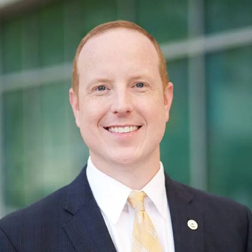
GUEST COLUMN, Vance Ginn, Kansas Policy Institute
Campaign season produces plenty of promises. Candidates tell us what they will spend, cut, subsidize, protect, and deliver. Voters should ask a harder question: What limits will you put on yourself once you have power?
Washington Post columnist George Will recently offered three questions voters should ask congressional candidates. His questions concern runaway federal deficits, presidential emergency powers, and Congress handing regulatory authority to unelected agencies.
Different issues, same problem: Government grows when politicians face weak incentives to restrain themselves. Kansas should learn from Washington’s mistakes.
Lest anyone be confused, this isn’t a partisan point or to support anyone for office – something KPI is prohibited from doing. This is an attempt to ask readers, and all Kansans, to cut through the campaign rhetoric and demand actual answers to real questions.

- Details
GUEST COLUMN, David Trabert, Kansas Policy Institute
One thing that stood out in our post-mortem of the Legislature’s failure to pass property tax relief this year was a knowledge gap on a variety of property tax issues, including the effectiveness of property tax limits in other states and some basic facts.
Our new policy paper, “Examining the issues and options for property tax relief in Kansas,” addresses those and many other important issues.
Section 1 lays out the basics of property taxes, including how they are calculated, how revenue distributions among taxing authorities have changed over time, assessed valuation trends, and how Kansas compares with other states. Section 2 examines the main forces driving property tax increases: assessment ratios, how much governments rely on property taxes, and how much local officials choose to spend.
Read more: OPINION – Examining the issues and options for property tax relief in Kansas

- Details
THE POSTSCRIPT, Carrie Classon
I’m sure someone must have mentioned that I’d be on a boat.
But I somehow missed that information entirely until I was given directions to a boat landing. A book club was reading my novel, “Loon Point.” Someone in the book club knew my mother, and she wrote, asking if I would attend the meeting. “Loon Point” is described as book club fiction by my publisher, but I usually don’t hear about book club meetings unless someone mentions it after the fact. This time, however, I ended up at a boat landing—in the middle of nowhere.
More Articles …
Page 16 of 44